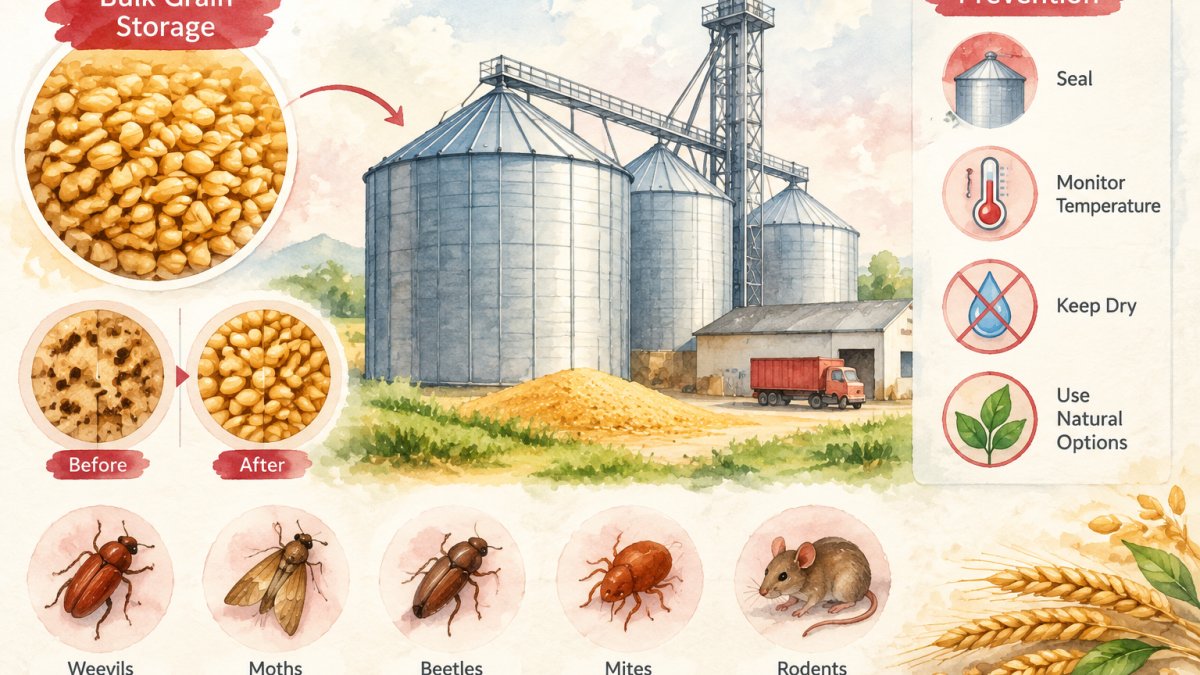
 How-to
How to Prevent Pests in Bulk Grain Storage
Last Updated: November 5, 2026
Quick Summary
To prevent pests in bulk grain storage, start with clean, dry grain and remove any one of the three things pests need: food, moisture, or access. Store grain in airtight, light-blocking containers, keep it cool and dry, and inspect seals monthly. Food-grade diatomaceous earth and oxygen absorbers add a natural line of defense.
- Pests need food, moisture, and access; removing any one stops them from thriving.
- Aim for grain dried to roughly 12-14% moisture depending on the grain.
- Hold grain cool, ideally below about 60°F (15°C) where practical, to resist insects and mold.
- Never store grain against an outside wall or directly on a bare concrete floor.
- Freeze small batches for several days to kill eggs, larvae, and adults without chemicals.
Table of Contents
- Why Bulk Grain Storage Needs a Biblical Approach to Pest Prevention
- Start With Clean, Dry Grain: The Foundation of Pest-Free Bulk Grain Storage
- Moisture Control in Grain Bins: The Silent Pest Magnet
- Best Containers for Bulk Grain Storage: Choosing Pest-Proof Vessels
- Diatomaceous Earth for Grain Storage: A Natural Line of Defense
- Identifying and Troubleshooting Common Stored-Grain Insects
- Build Your Pest-Free Pantry With Allstarhealth
- Frequently Asked Questions
Why Bulk Grain Storage Needs a Biblical Approach to Pest Prevention
Pests destroy food. That is not a modern discovery. It is one of the oldest problems in human history, and Scripture treats a full, protected storehouse as a blessing worth guarding. "Gracious words are a honeycomb, sweet to the soul and healing to the bones" (Proverbs 16:24) reminds us that what we keep matters, and so does how we keep it.
At Allstarhealth, we help households build pantries that last. Learning how to prevent pests in bulk grain storage is the difference between a year of nourishment and a season of waste.
Bulk grain storage is the practice of keeping large quantities of dry grain in sealed, protected conditions so it stays clean, dry, and free of insects and rodents. The core principle is simple: pests need food, moisture, and access. Remove any one of those and they cannot thrive.
Below, we walk through each layer of defense, from grain prep to natural deterrents. The key insight most guides miss: prevention starts long before the first bug appears.
Start With Clean, Dry Grain: The Foundation of Pest-Free Bulk Grain Storage
The biggest mistake with pest prevention is treating storage as the first step. It is not. Grain that goes into a container already carrying insect eggs or excess moisture will fail no matter how good the container is.
Start with these steps:
- Buy from a trusted source. Choose a supplier that stores grain cool and dry.
- Inspect before storing. Look for webbing, dust, or live insects.
- Dry grain fully. Grain with high moisture invites mold and pests.
- Clean the storage area first. Sweep out old grain dust and crumbs.
A common mistake is skipping the cleaning step. Pests hide in crevices and leftover dust. A quick sweep is not enough. Vacuum corners, shelves, and lid rims.
If you want a deeper walkthrough on preparing grain properly, see our guide on how to store organic grains long term. And once your grain is clean and dry, 5 steps to store bulk organic grains for maximum freshness covers keeping it that way.
Moisture Control in Grain Bins: The Silent Pest Magnet
Moisture control in grain bins is the single most overlooked defense against pests. Damp grain grows mold, mold attracts insects, and insects invite rodents. The chain starts with a single drop of condensation, and it usually starts in a spot you cannot see.
Here is the mechanism most guides skip. Grain is a poor conductor of heat, so when outside temperatures drop, the outer grain cools faster than the core. Moisture migrates from the warm center toward the cold surface, where it condenses. That wet pocket becomes a mold nursery and an insect nursery at the same time. This is why a bin can look fine on top and be spoiling six inches down.
Know your moisture target. For safe long-term storage, most practitioners aim for grain dried to roughly 12-14% moisture depending on the grain, and cooler is always safer than warmer. A cheap handheld moisture meter takes the guesswork out of it; test a sample from the center of the batch, not just the surface.
Cool the grain, don't just dry it. Temperature and moisture work together. Grain held cool, ideally below about 60°F (15°C) where practical, resists both insects and mold far better than warm grain. This is where aeration earns its keep.
Use aeration, even at home scale. Aeration moves ambient air through the grain mass to even out temperature and sweep away the warm, damp pockets where condensation forms. On a farm bin this means a fan and perforated floor; on a homestead scale it means a small fan and a breathable container, or simply storing in a cool, stable room. The goal is the same: no temperature swings, no condensation.
Seal and insulate the container. Airtight containers keep humid air out. Oxygen absorbers pull down both oxygen and residual moisture. Keep containers off bare concrete and away from outside walls, where cold surfaces can create condensation.
Check seals monthly. A loose lid or a cracked gasket undoes everything. Run a finger around the rim and look for gaps.
Watch out: never store grain against an outside wall or directly on a bare concrete floor. Temperature swings create condensation inside the container, and that moisture is exactly what pests and fungi need. If you ever smell a musty or sour note when you open a container, treat it as a moisture problem first, the insects are usually a symptom, not the cause.
Best Containers for Bulk Grain Storage: Choosing Pest-Proof Vessels
The best container for bulk grain storage is one that seals airtight and blocks light. Glass jars, food-grade buckets, mylar bags, and metal tins are common options. The right pick depends on your batch size and your budget.
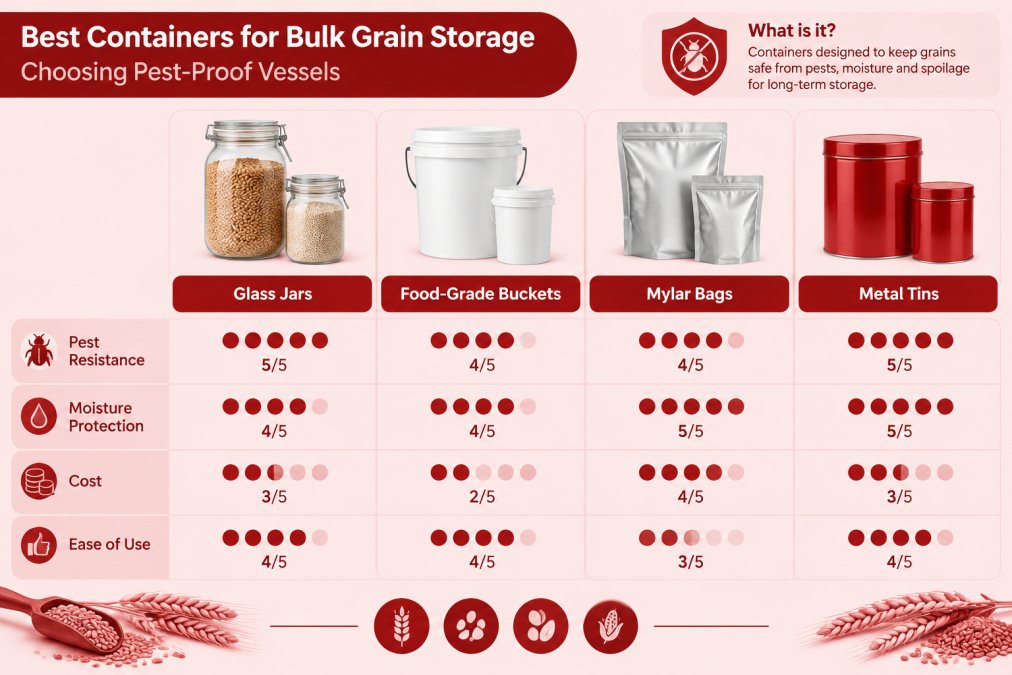
| Container | Pest Resistance | Moisture Protection | Best For |
|---|---|---|---|
| Glass jars | High | High | Small batches, visible inventory |
| Food-grade buckets | High | Medium | Large bulk batches |
| Mylar bags | High | High | Long-term, oxygen-free storage |
| Metal tins | Medium | High | Pantry-ready portions |
For an airtight option with multiple sizes, the Vtopmart airtight flour and sugar containers work well for everyday pantry grain. If you need something larger and fully sealed, the stainless steel airtight grain bucket is built for bulk quantities.
Diatomaceous Earth for Grain Storage: A Natural Line of Defense
Diatomaceous earth is a powder made from fossilized algae that is used in some grain storage practices.
How to use it well:
- Use food-grade only. Never use pool-grade DE.
- Dust the container first. Coat the bottom and sides lightly.
- Layer it through the grain. A thin dusting between layers helps.
- Keep it dry. Wet DE stops working.
- Reapply after cleaning. Each new batch needs a fresh layer.
Identifying and Troubleshooting Common Stored-Grain Insects
Stored-grain insects are small, but their damage is not. Most guides stop at prevention. This section is the part they leave out: how to identify what you are dealing with and exactly what to do when you find it, especially at home scale, where you are not going to fumigate a whole bin.
Identify before you act. The three most common culprits each leave a signature:
- Weevils: tiny holes in the grain kernels and fine dust at the bottom of the container. The adults are small, dark, and slow-moving.
- Grain beetles: flat, fast-moving insects that cluster near the surface and in crevices around lids.
- Moths (Indian meal moth and relatives): webbing across the top layer, on lids, or in corners, plus silken clumps that bind grain together.
A fourth pattern worth knowing is mites, which show up as a fine, moving dust in damp grain, a strong signal that moisture, not just insects, is the root problem.
The home-scale outbreak playbook. When you find bugs, work in this order:
- Isolate the affected container immediately, away from clean grain. Pests travel, so assume neighbors are at risk until proven otherwise.
- Decide salvage versus discard. Light infestations in whole grain can sometimes be salvaged; heavily infested or moldy grain should be discarded. Do not try to salvage grain that smells musty.
- Freeze small batches. Sealing grain in bags and freezing for several days kills eggs, larvae, and adults, a practical, chemical-free option for home quantities. Let the grain return to room temperature before opening to avoid condensation.
- Heat is an alternative for some setups. Sustained warm temperatures kill insects too, but heat can affect grain quality, so use it carefully and only where appropriate.
- Clean and re-treat the container before reuse. Vacuum every crevice, then re-dust with food-grade diatomaceous earth or refresh oxygen absorbers.
- Check every neighboring container on the same shelf. A common mistake is treating only the visible container while the infestation spreads quietly next door.
Prevent the next round. Once clean, tighten the basics: airtight seals, cool and stable temperatures, and a monthly inspection of lids and rims. For households avoiding chemicals, food-grade diatomaceous earth and oxygen absorbers do most of the preventive work without fumigants.
Watch out: do not assume a clean-looking top layer means clean grain. Insects and their eggs hide in the core and along the bottom, so always sample from the middle and the base before declaring a container pest-free.
Build Your Pest-Free Pantry With Allstarhealth
A protected grain supply is a gift you give your future self. It takes a few careful steps, but the payoff is months of clean, ready food.
Allstarhealth makes that easier. We offer a curated selection of organic grains and wholesome superfoods, plus wellness resources like herbal medicine and essential oils to support a holistic pantry. If you are ready to build a pantry rooted in faith and good health, our guide on how to start a biblical diet is a great next step.
Frequently Asked Questions
How can I naturally prevent insects in my stored grains?
Natural prevention starts with dry, clean grain and airtight containers. Store new bulk grain storage purchases in sealed containers, and keep your pantry cool and dry. Keep your pantry cool and dry, and inspect containers monthly for signs of weevils or moths.
Is diatomaceous earth safe to use with food-grade grain storage?
Food-grade diatomaceous earth is safe when used correctly. Always choose food-grade, not pool-grade, diatomaceous earth for grain storage.
How does moisture control prevent grain infestation?
Moisture control in grain bins removes the damp conditions where mold, fungi, and stored-grain insects thrive. Keep grain below safe moisture levels by drying it thoroughly before storage, using airtight containers, and adding moisture absorbers. Store bins off concrete floors and away from humid areas.
What are the best containers for long-term pest-proof grain storage?
Airtight, sealed containers are commonly used for bulk grain storage, including glass jars, food-grade buckets, mylar bags, and metal tins.
Your pantry deserves better than plastic bags and hope. Start with clean, dry grain, seal it well, and guard it with natural defenses. Get started with Allstarhealth and build a grain supply you can trust, season after season.